GYRO Review
10K Audio sent me theirGyro musical pattern generating instrument. I had never heard of 10K before they reached out to me, but it turns out the members of this team worked on one of my favorite Reaktor instruments, TRK-01. Fittingly, Gyro is a musical groove sequencer that lets you switch between various chords and patterns as well as generate new ideas with ease. Gyro is a sample based instrument, making it a good fit for generating musical ideas. I think there’s enough depth in this tool to justify it as a sound source for various experiments.
the UI is straight forward, there’s this kind of magical ink flow effect that emanates from the four sample slots which can be deactivated if you find it distracting. There are randomizers everywhere, and each sub-section can be opened up to reveal more controls. It reminds me very much of Reaktor’s Flesh instrument and various Kontakt library pattern generators. Gyro feels very performance ready, while playing with it I found a setting to deactivate pattern retriggers, this allowed me to play through the various chords legato without resetting the sequence.
The main workflow of Gyro is to either randomize or load presets, and switch between chords using the chord triggers, and patterns with the four pattern triggers. This can be done from a keyboard for some very fun jamming. I found it reminded me of playing back samples cut from a song, where different slices shared similar musical ideas, but transposed to different chords. The included presets and randomization lead to some fun musical ideas that made me want to record a loop and create a beat. I could see this tool being very useful for anyone creating a sound track for a video game or music for various visual media.
In the performance page, each sample pops up a ring of simple controls when you hover over it. These let you mute, transpose, filter, and randomize that sample layer for some quick adjustments. The patterns, chords, sounds, and effects can all be randomized via their icons as well, so you can just generate various ideas as you please.
Each of the sections have their own page that allow you to edit things further, upon first glance this looks like a simple tool, but 10K really lets you get under the hood and control a lot if you want.
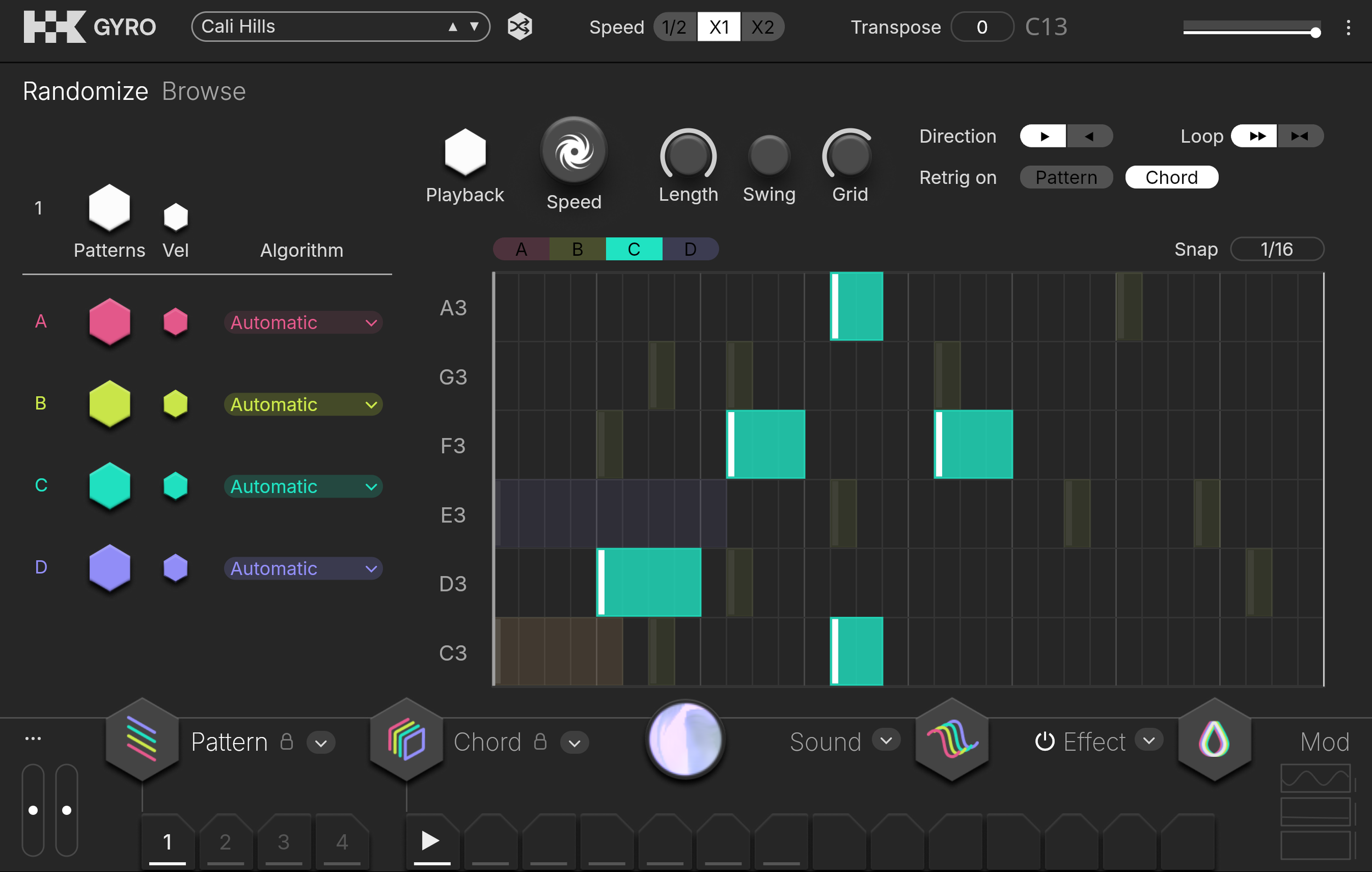
Pattern: The pattern page gives you four sequencers. The sequencers don’t have set note values, instead you are creating a pattern of chord tones so each lane changes its respective pitch depending on which chord is active. You can create odd times, but unfortunately all four voices seem to be tied to the same sequencer length. You can set different algorithms per layer to change the randomize behavior so generated patterns will share the same musical format.
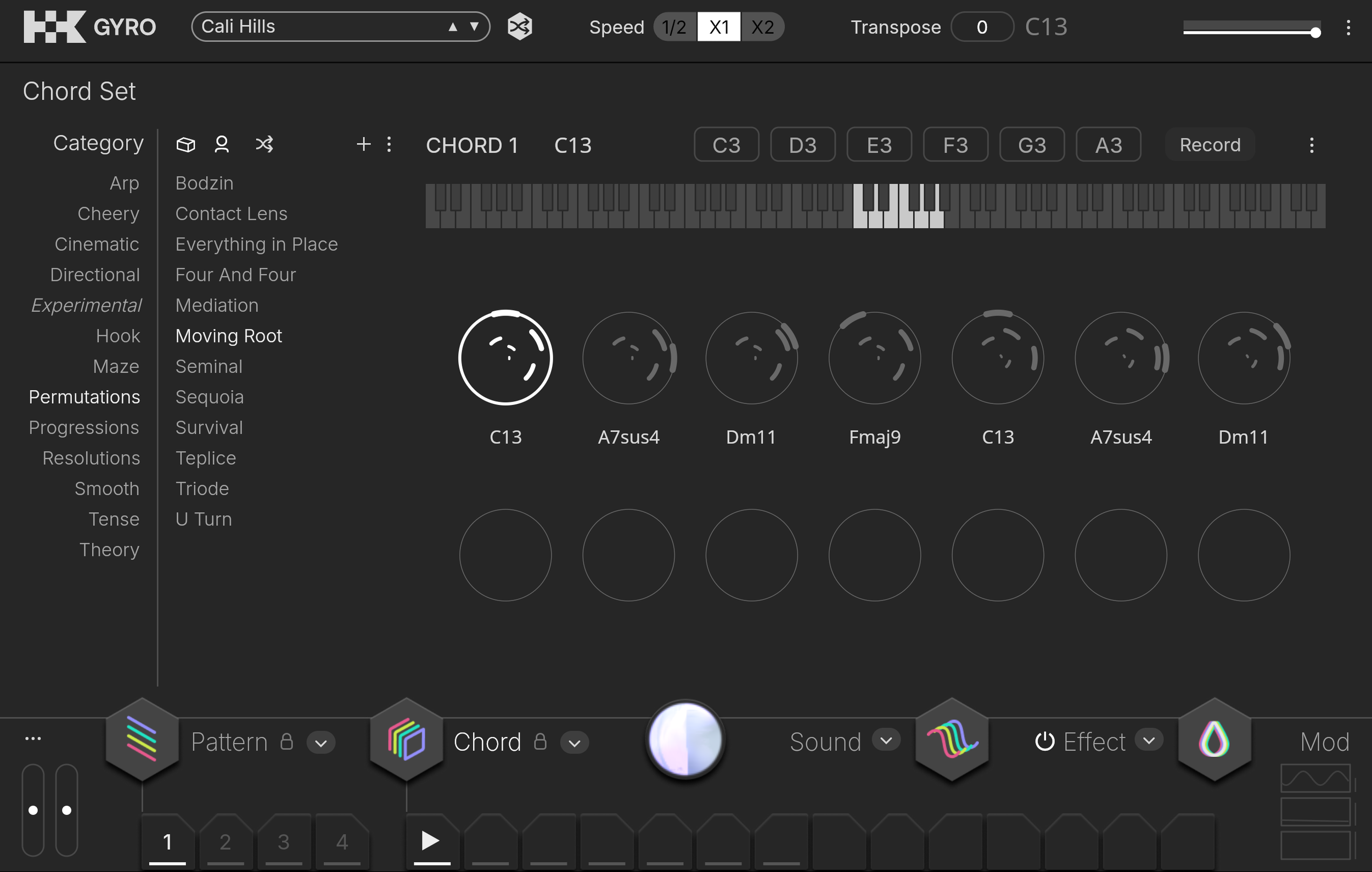
Chord: This page lets you set the chord for each key switch. Chords can be up to six notes each. You can manually enter each chord or record them via midi.
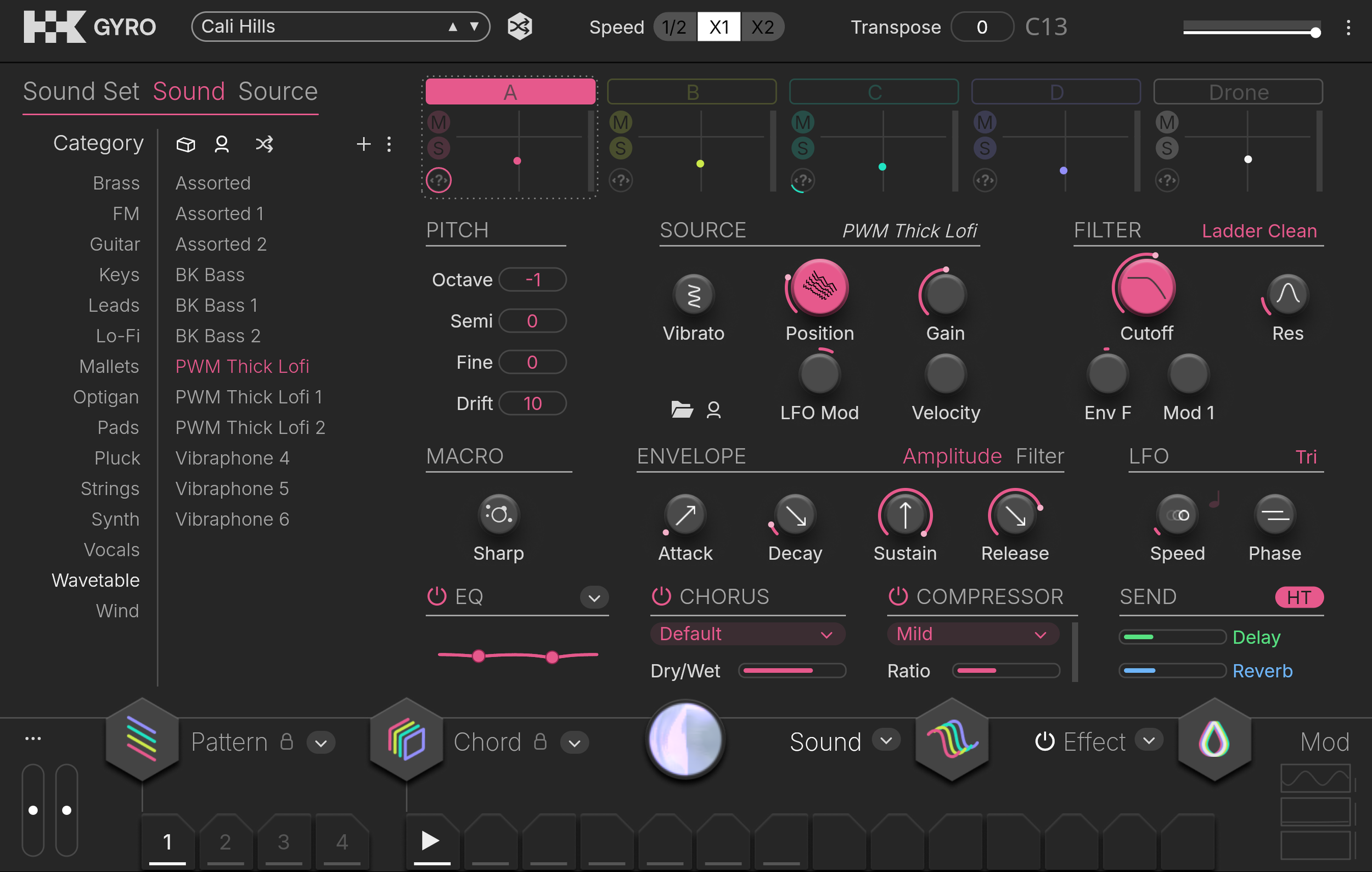
Sound: The sound tab lets you pick your samples and tweak some controls such as start position, filter, some simple effects and basic envelopes. This is basic control over the sound, the results definitely depend on the samples you use, but you can do your own sound design externally and import them if you want. The included samples are solid, it seems like everything is in key and most samples work together. This is the main selling point I see to a device like this, just being able to get quality musical results quick. I was informed by the developers that there is a wavetable mode that will behave more like a wavetable synthesizer, it just requires accessing the “wavetable” source category.
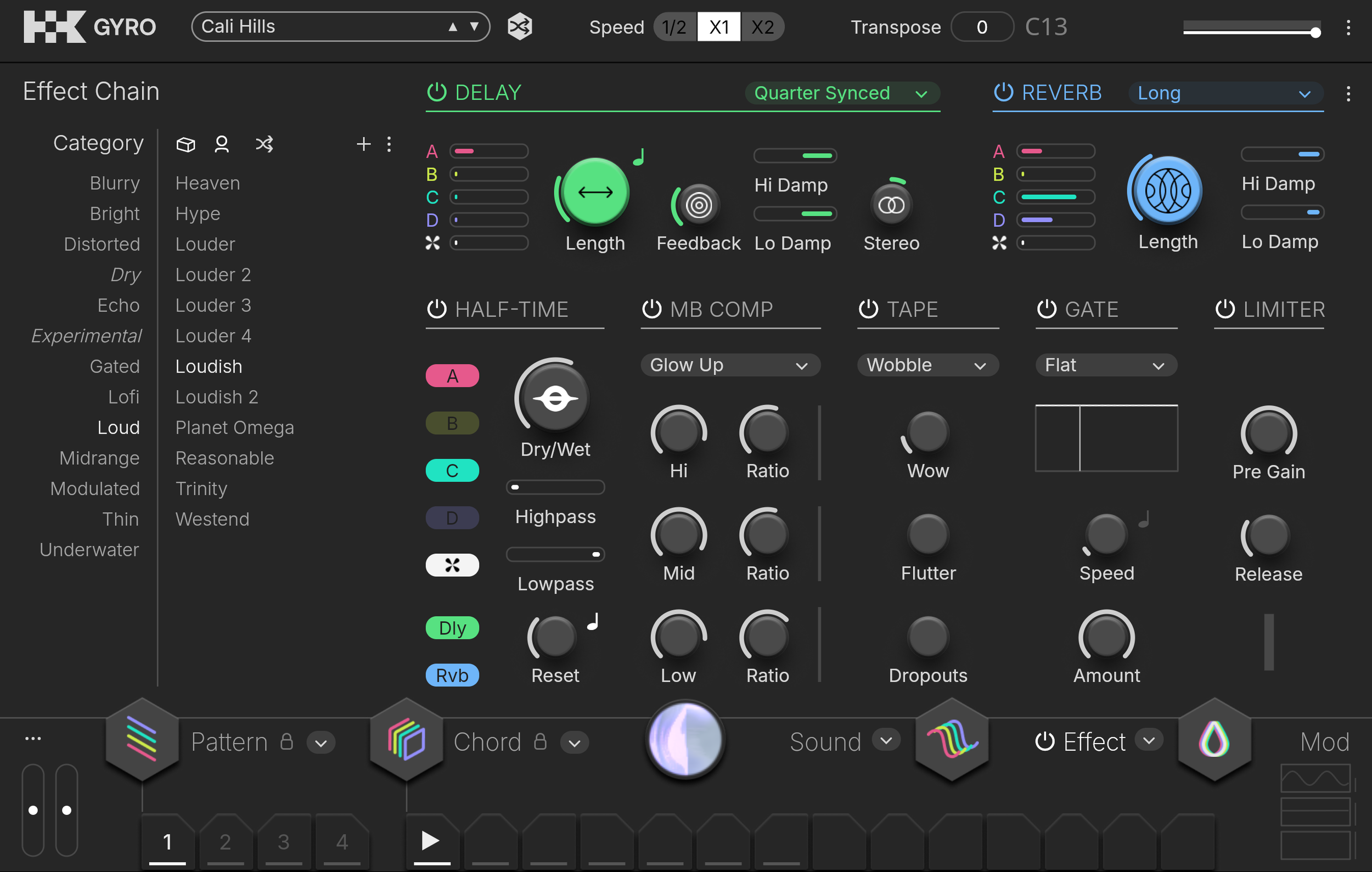
Effect: The effects are basic, on the sound tab you get a two band eq, a simple chorus, and compressor. There are sends for the delay and reverb. The delay sounds pretty great, I tried modulating it and got some fun results so there is a little sound design here. A half time effect slows things down and has it’s own macro on the front panel. THere’s also a multi-band compressor, a tape effect, rhythmic gate, and Limiter. I suspect these effects aren’t meant to transform the sound so much as they are meant to glue everything together and add ambience.
Mod: There’s a decent amount of modulation built into Gyro, each control in the sound and effect tabs can be right clicked to reveal modulation sources. These include the three LFOs modwheel, and macros. EAch LFO is different, you get a standard shapes LFO, and random LFO, and a drawable LFO. Unfortunately they do not even come close to audio rate,
As far as my workflow goes, I don’t have much use for sample based instruments, I tend to create all my own samples, and need to make sure everything I use is created from scratch. Though, for writing my own music, a tool like this is a lot of fun, especially when you can completely remix the results with something like Infiltrator or Effectrix. They’ve also included the ability to output midi or import your own samples, so you can make things 100% your own if you desire. I look at a tool like Gyro as an idea generator, a nice tool to create musical starting points or to sample from for beat production. You can build presets from scratch, but I really think the workflow and design is suited for randomizing and editing presets. I’d love to see them take this pattern generation tool, but instead include drum synthesis, and some cool sound design engines like they have in TRK-01.