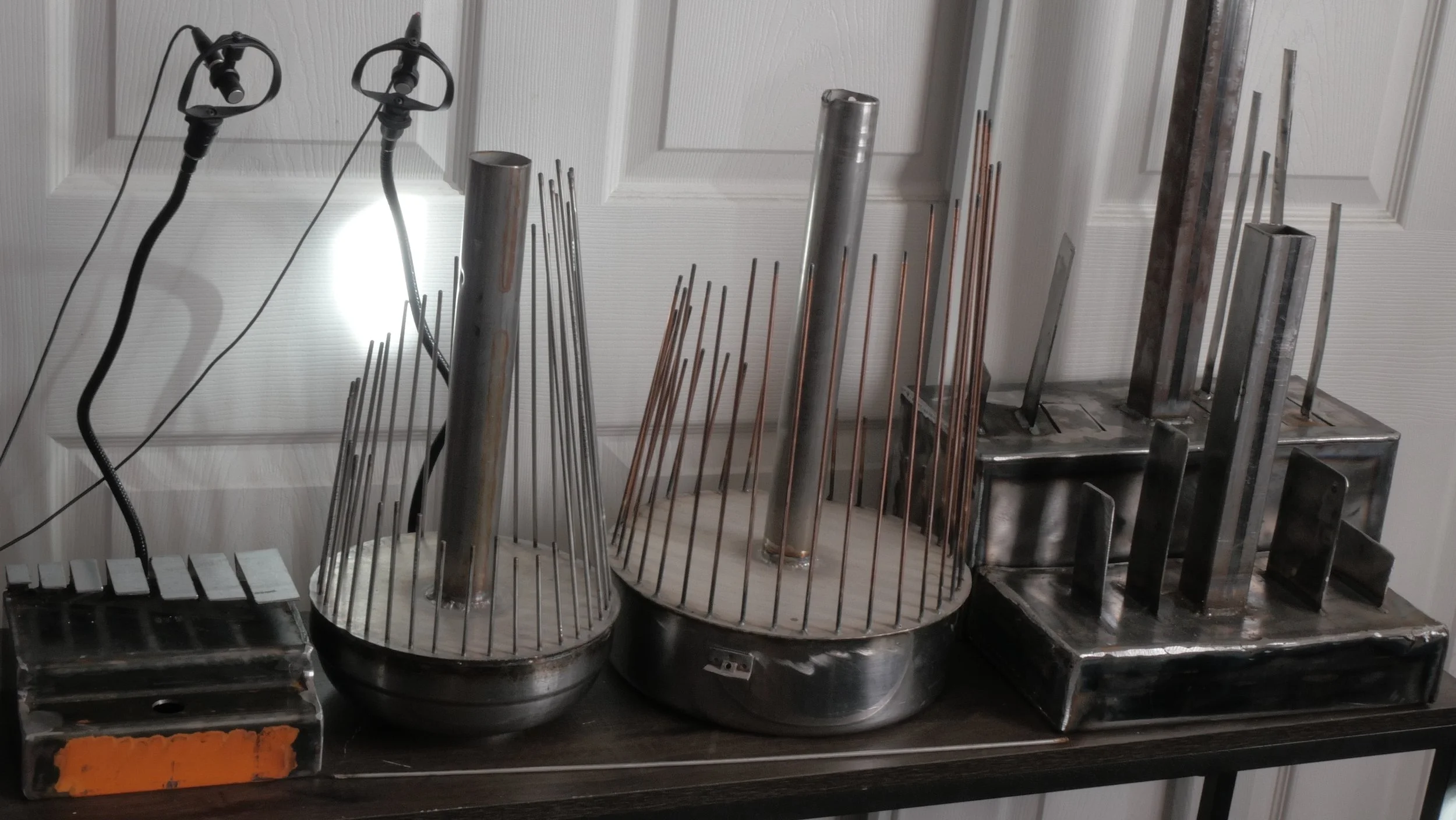
My friend welded these really cool instruments using scrap metal and some thrifted objects. You make recognize the waterphones, these are my favorite of the bunch and sound incredible, there’s also two “scrap hammers” and a neat little kalimba-like instrument. I wont be able to keep all of these as I am moving and will be limited on space, so I figured what better time to record them than now. I’ll be chopping these recordings into a pack giving me something simple to work on when I get into the new spot.
You can find the complete sample library here
Today I recorded the small kalimba-like instrument and the two “scrap hammers”. I’ll be dedicating a whole day to each waterphone as they require a lot more time to sustain and there’s a wider range of articulations to explore, especially with the water. I recorded each instrument with a variety of techniques, I struck each tine with a mallet, struck them again with the wood end of the mallet, used a metal rod and flat metal ruler to strike and scrape each instrument, I did a bit of bowing, and used a large bundle of keys to get some fun rattling textures. The ruler was fun because it made for some exceptionally grotesque scrapes, I also enjoyed dropping it onto each instrument for some rattles. Some of my favorite textures came from the keys, rattling this large bundle of keys against these assortments of scrap metal produced jangly clanging cacophony. I ended the session by banging and scraping each of the instruments into one another (desides the waterphones) for some heavier aggressive textures.
I mic’ed everything up with two LOM USI pro microphones running into my Universal Audio VOLT interface. I decided to use the built in “76” compressor set to “fast” mode, it just sounded slightly better and these instruments have such a high dynamic range, it was nice to squash things a bit with some analog compression. I typically try to leave my samples as dry as possible, but this one setting significantly improved the recording quality and didn’t add any discernible filtering or coloration. As you can see in the photo, I used a couple gooseneck clips to hold the microphones, I found these to be particularly stiff and hard to work with. I enjoyed that they are a simple spring clip instead of a screw on clamp, but the actual goose necks were strong enough to hold way more weight than necessary. If anyone knows of a better goose neck stand that is both a spring clip and a more malleable neck, please let me know.
I’m excited to record the waterphones, I plan to tediously pluck each tine, I’ll do a bit of playing with the keys and mallets, but the majority of the recordings will be bowed with water. So far I have over an hour of audio recorded, so I’ll likely have around three hours or so to go through once I finish the last session. I’ll be curious to see how many samples end up in this pack, I really enjoy these long acoustic recording sessions, it may be awhile until I can manage another, but they are fun to write about and share. The resulting samples are also a blast to play with in various granular and spectral engines. I can’t wait to make these available.